
Brewery Taproom Construction: 8 Essential Requirements for a Successful Build in 2026
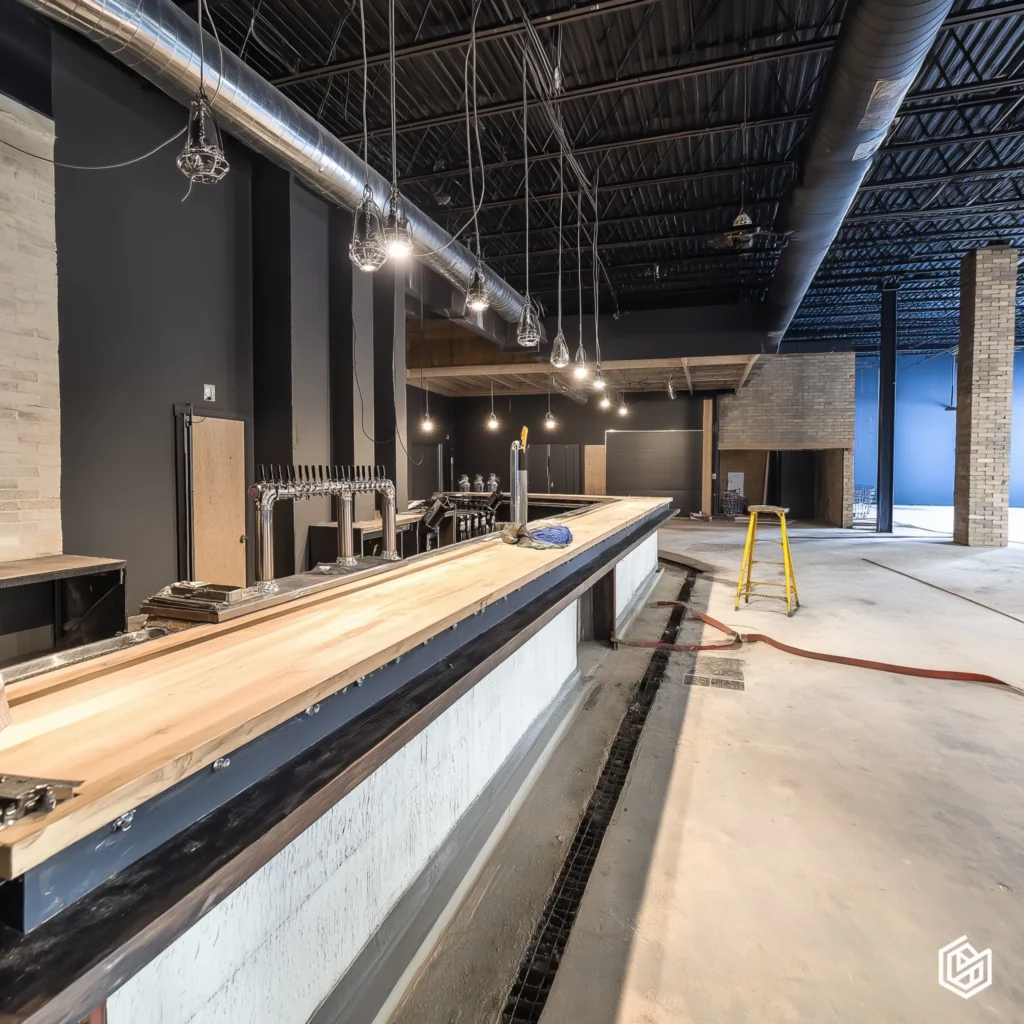
Brewery Taproom Construction: 8 Essential Requirements for a Successful Build in 2026

Table of Contents
Brewery taproom construction sits at the intersection of industrial manufacturing and hospitality design — a unique combination that demands specialized expertise from everyone involved. Craft breweries have evolved from niche passion projects to mainstream community gathering places across Georgia and Florida, and building these facilities correctly from the start is the difference between a thriving business and an expensive headache.
Whether you’re opening your first microbrewery or expanding an established operation into a larger production facility, understanding the specialized construction requirements saves time, money, and frustration.
Why Brewery Taproom Construction Is Unlike Any Other Build
A brewery is not a restaurant with tanks. It’s a manufacturing facility with a hospitality component, and that distinction matters enormously during construction. Brewery taproom construction must simultaneously satisfy production efficiency requirements, food-service health codes, alcohol licensing standards, building occupancy classifications, and customer experience expectations.
The Brewers Association reports that the United States now has more than 9,500 craft breweries, and new openings continue despite market maturation. The facilities that succeed long-term are built correctly from the foundation up — not retrofitted after problems emerge.
Production Space Requirements
The production side of brewery taproom construction demands infrastructure that most commercial spaces simply don’t provide. Here are the 8 essential requirements that your contractor must address:
1. Structural Floor Loading
Full fermentation tanks are extraordinarily heavy. A 30-barrel fermenter filled with beer and yeast weighs approximately 8,000 pounds. Multiple tanks concentrated in a production area create point loads that standard commercial floor slabs cannot support. Reinforced concrete slabs — often 6 inches or thicker with additional rebar — are typically required. Your structural engineer must calculate loads based on your specific equipment plan.
2. Extensive Floor Drain Systems
Brewing generates enormous volumes of liquid waste. Between cleaning cycles, spills, condensation, and process water, production floors must handle significant drainage demands. Brewery taproom construction requires carefully sloped floors (typically 1/8″ to 1/4″ per foot) directing water to strategically placed trench drains or point drains throughout the production area.
Inadequate drainage is one of the most common and costly brewery construction mistakes. Standing water creates safety hazards, sanitation issues, and regulatory problems.
3. Glycol Cooling Systems
Temperature control is critical throughout the brewing process. Glycol chiller systems circulate cooled glycol through insulated piping to jacketed fermentation tanks, brite tanks, and cold storage. These systems require dedicated electrical service, equipment pads, and piping routes planned during initial brewery taproom construction — not added as an afterthought.
4. Three-Phase Electrical Service
Production-scale brewing equipment demands substantial electrical power. Brewhouses, glycol chillers, grain mills, canning lines, and other equipment typically require three-phase power service — which may not be available at every location. Verify power availability and capacity before committing to a site. Electrical upgrades from the utility can cost $20,000–$100,000+ and take months to complete.
5. Robust Ventilation Systems
Brewing produces steam from the kettle, CO2 from fermentation, and significant heat from equipment operation. Proper ventilation systems must manage all three. CO2 in particular is a safety hazard — it’s heavier than air and can accumulate at floor level in enclosed spaces. OSHA requires monitoring and ventilation for spaces where CO2 may accumulate.
6. Water Supply and Waste Management
Brewing is water-intensive. Production requires large volumes of quality water, and waste discharge must comply with local sewer authority requirements. Brewery wastewater has high biochemical oxygen demand (BOD) that may require pre-treatment before discharge. Check with your local sewer authority early — surcharges or pre-treatment requirements significantly affect operating costs and construction scope.
7. Grain Handling and Storage
Raw ingredients need proper storage that manages temperature, moisture, and pest control. Grain delivery requires accessible receiving areas — typically roll-up doors sized for pallet delivery. Dust management from grain milling requires its own ventilation considerations.
8. Compressed Air and Gas Systems
Brewery operations require compressed air for pneumatic valves and CO2/nitrogen systems for carbonation, tank pressure management, and draft service. These utility systems need proper routing, pressure regulation, and safety provisions built into the brewery taproom construction from the start.
Taproom Design and Hospitality Considerations
The taproom is where your customers experience your brand, and modern craft brewery patrons have high expectations. Successful brewery taproom construction balances the industrial-chic aesthetic that showcases brewing equipment with genuine hospitality functionality.
Draft System Design: The connection between production and service is the draft system. Proper installation — including glycol-cooled trunk lines for long runs, balanced line lengths, and correctly sized faucets — ensures quality pours. Draft system design should be coordinated with your brewery equipment vendor during construction planning.
Food Service: Even limited food service (snacks, pretzels, food truck partnerships) may trigger health department requirements for handwash sinks, food prep areas, or three-compartment sinks. Full kitchen installations add substantial scope and cost. Plan food service approach before design is finalized, as it impacts ventilation, plumbing, and health department review.
Outdoor Space: Patios, beer gardens, and outdoor seating have become expected at craft breweries. Budget for proper hardscaping, drainage, lighting, and potential enclosure for weather protection. Outdoor areas affect occupancy calculations and may require their own permitting. Our food hall construction guide covers similar multi-use hospitality space design challenges.
Restroom Capacity: Restroom count is determined by maximum occupancy, which includes both taproom and any event space. Underestimating occupancy during design leads to inadequate restrooms — a code compliance issue that’s expensive to fix after construction. ADA accessibility requirements apply to all restrooms and the path of travel to reach them.
Navigating Regulatory Complexity
Brewery taproom construction involves regulatory requirements from more agencies than almost any other commercial project type:
Building Department: Construction permits, inspections, and Certificate of Occupancy. Occupancy classification (often a mix of factory/industrial and assembly/mercantile) affects building code requirements including fire protection, egress, and structural provisions.
Fire Marshal: Fire suppression requirements, occupancy limits, egress requirements, and hazardous materials storage provisions for chemicals used in cleaning and brewing processes.
Health Department: Required if serving any food. Inspections cover food handling areas, handwash stations, restroom facilities, and pest management.
TTB (Alcohol and Tobacco Tax and Trade Bureau): Federal brewing permit required before producing beer. Facility layout must meet TTB requirements, and applications should be submitted early as processing times can extend to several months.
State and Local Alcohol Licensing: Georgia and Florida have different state licensing requirements, and local jurisdictions may impose additional regulations. Some of these interact directly with construction — for example, required separation between production and retail areas.
Coordinating across all these agencies from project inception prevents costly redesigns and delays. Your general contractor should have experience navigating this multi-agency process, or work closely with your licensing consultant to align construction with regulatory timelines.
Finding the Right Space for Brewery Taproom Construction
Not every commercial building works for a brewery. Before committing to a lease or purchase, evaluate these critical factors:
Power Availability: Three-phase power at sufficient amperage. Upgrades are possible but expensive and time-consuming.
Drainage Access: Proximity to adequate sewer infrastructure. Septic systems rarely support brewery waste volumes.
Floor Capacity: Existing slab condition and load capacity. If reinforcement is needed, budget accordingly — it can add $15–$40 per square foot.
Ceiling Height: Minimum 16–18 feet for fermentation tanks and brewing equipment. Higher ceilings also contribute to the open, industrial aesthetic customers expect.
Zoning: Must permit both manufacturing (brewing) and retail/restaurant (taproom) uses. Industrial zones often allow both, which explains why many craft breweries locate in warehouse districts. For broader location considerations, our Central Florida construction guide covers regional factors affecting commercial projects.
Budget and Cost Expectations
Brewery taproom construction costs vary widely based on scope, location, and finish level. General ranges for a combined production and taproom facility:
Production space build out: $75–$150 per square foot (excluding brewing equipment)
Taproom build out: $100–$250 per square foot depending on finish level
Site improvements: $50,000–$200,000+ for parking, outdoor areas, and utilities
These figures cover construction only. Brewing equipment, furniture, licensing, and startup costs add substantially to total project investment. Plan for 10–15% construction contingency, as brewery projects frequently encounter unforeseen conditions. Contact Bowser Construction Group for a detailed assessment of your brewery project in Georgia or Florida.
Frequently Asked Questions
How long does brewery taproom construction typically take?
From lease signing to opening, expect 6–14 months depending on the condition of the existing space, permitting timelines, and scope of work. Allow additional time for federal and state licensing, which can run concurrently with construction.
Can any commercial contractor build a brewery?
Technically yes, but brewery taproom construction involves specialized knowledge that general commercial contractors may lack. Look for contractors with specific brewery or food/beverage manufacturing experience. Mistakes in drainage, structural loading, or ventilation are expensive to correct.
What size space do I need for a brewpub?
A small brewpub with 7–10 barrel system and 100-seat taproom typically requires 4,000–7,000 square feet. Larger production breweries with significant distribution need 10,000–25,000+ square feet. Plan for growth — relocating a brewery is extraordinarily expensive.
Do I need a general contractor or can I self-manage brewery construction?
Given the complexity of multi-agency permitting, specialized trade coordination, and code compliance requirements, a licensed general contractor is strongly recommended for brewery taproom construction. Self-managed projects frequently experience delays, code issues, and cost overruns that exceed the contractor’s fee many times over. Learn about the value of integrated contractor relationships in our post on working with design-build contractors.